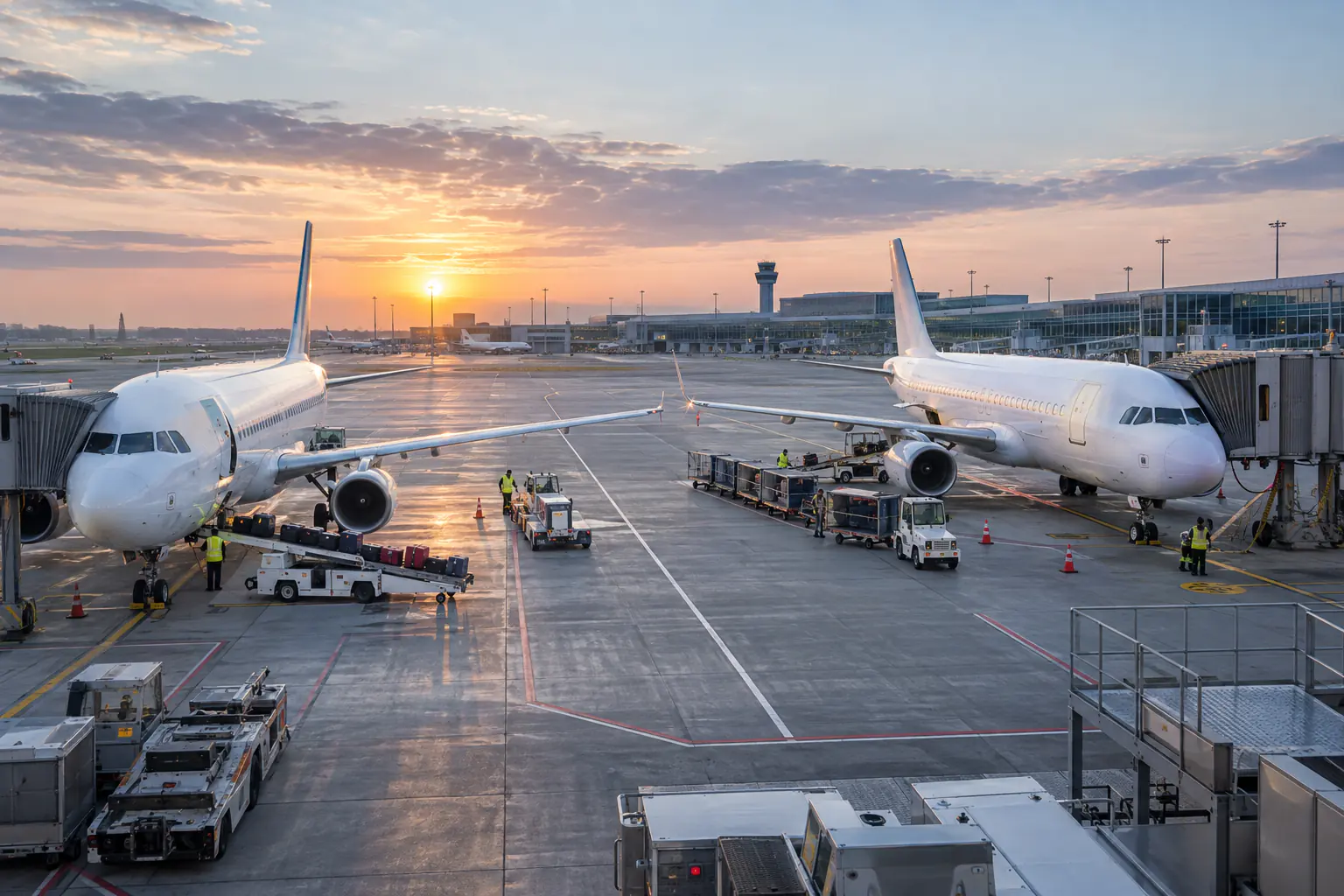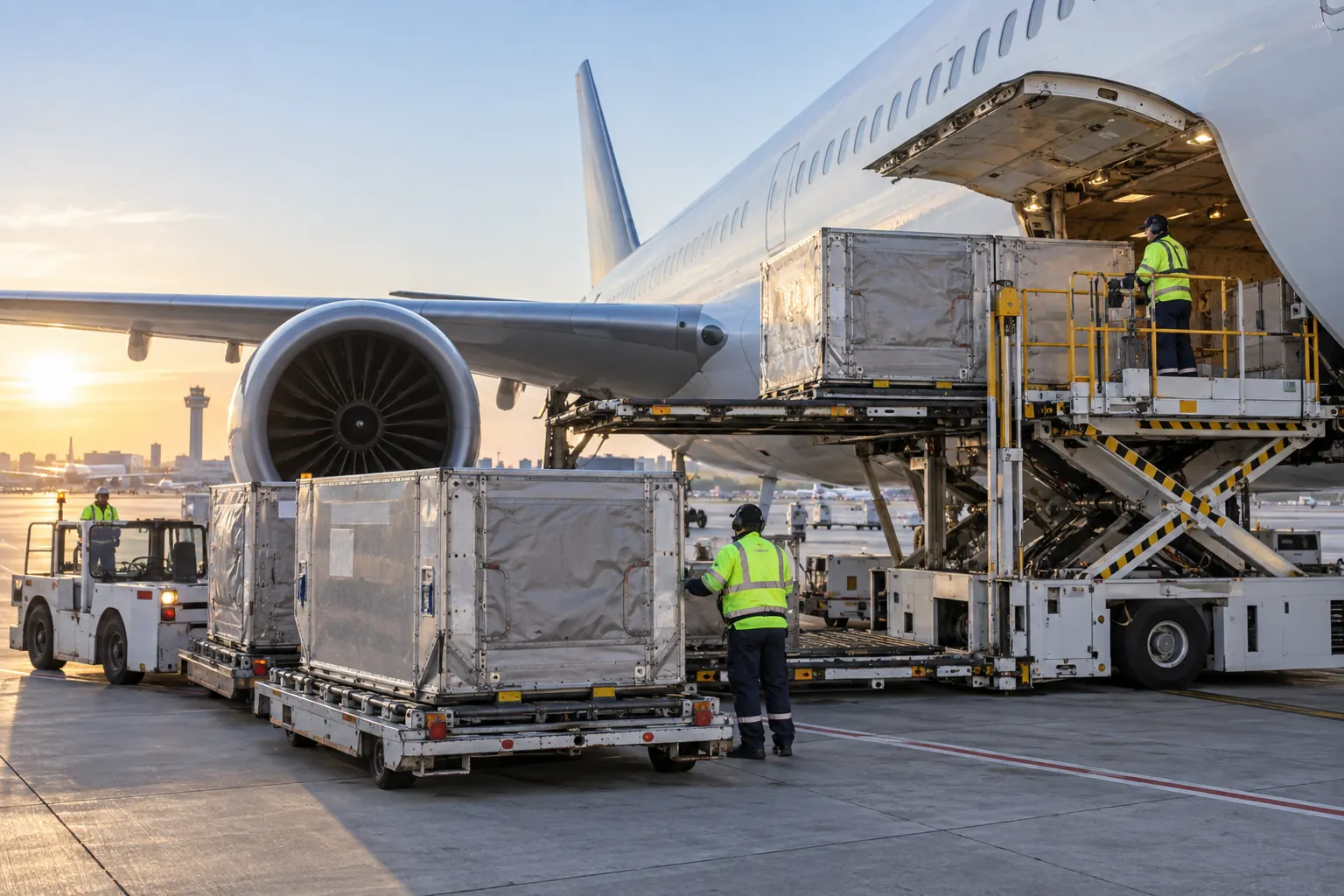
Passenger aircraft carry cargo in their lower holds, making flight schedules and fleet choices part of the freight network.
A second network under the seats
The lower hold carries baggage, mail and freight in the space available on a passenger flight. Dedicated freighters provide another capacity source. The route and frequency of passenger services therefore also affect cargo connectivity.

Why the space is variable
Aircraft type, baggage demand, fuel load, distance and operating limits determine how much freight can be accepted. Published theoretical volume is not the same as executed capacity; IATA distinguishes available cargo space using flown-flight data.
What planners compare
Forwarders compare schedule, transfer time, handling requirements and reliable capacity rather than distance alone. Per-shipment emissions estimates also depend on aircraft and load assumptions, including how passenger and cargo activity are allocated.
The passenger timetable sets the cargo clock
Freight travelling below the cabin uses capacity on flights designed primarily around passenger demand. A shipment may need a road transfer, a hub connection and customs processing before it reaches the final airport. A convenient passenger nonstop is not automatically the fastest cargo journey if cut-off times or available hold space are poor.
International Flight News separates verified facts, durable context and editorial analysis. Time-sensitive reports identify their primary sources, publication date and material updates.