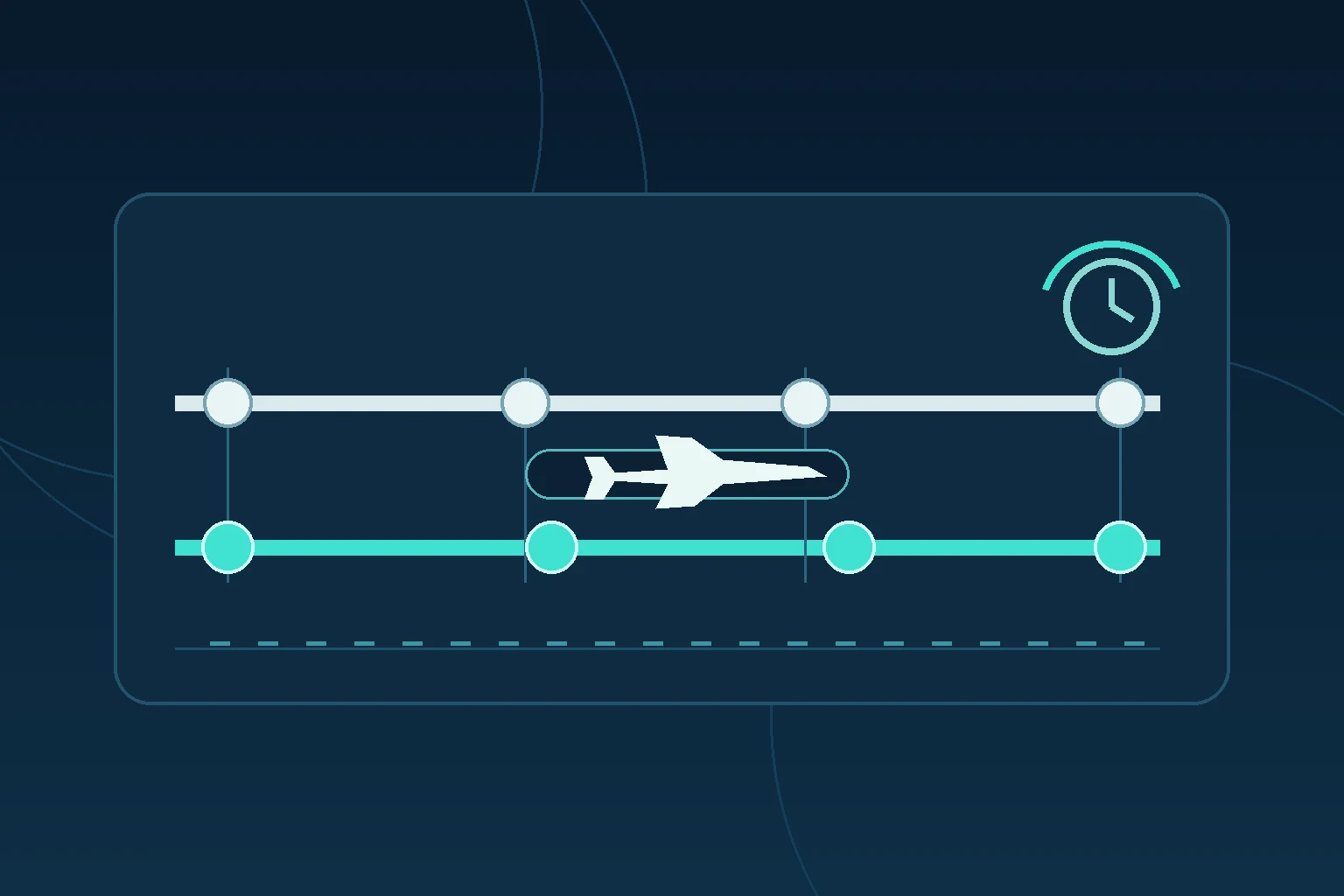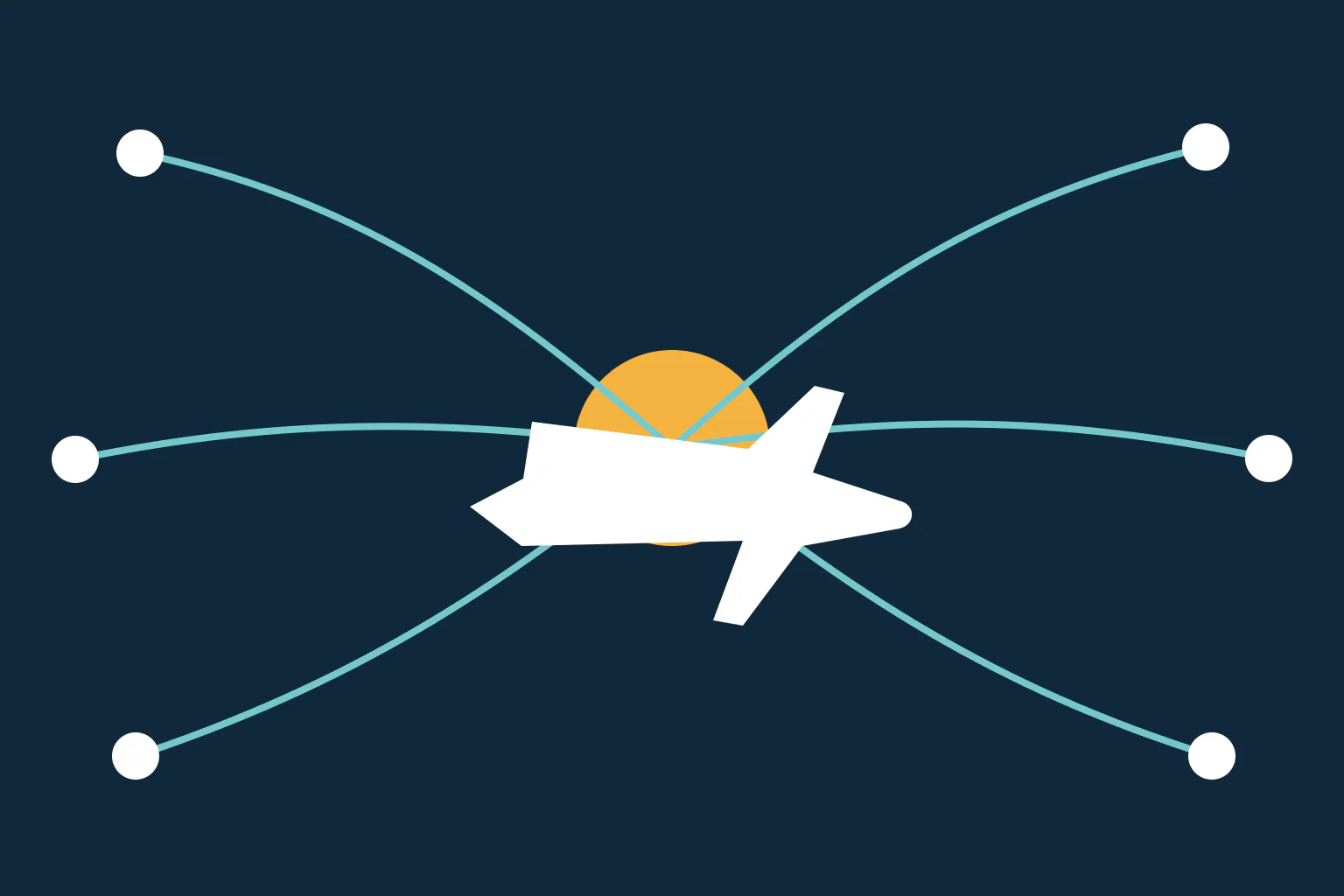
Banks of arrivals and departures create thousands of city pairs—but also concentrate pressure into short windows.
The multiplication effect
Flights arrive from one group of cities, passengers transfer, and departures leave for another group. Each well-timed arrival can feed many onward services, creating connections that would not support a nonstop route.
The cost of compression
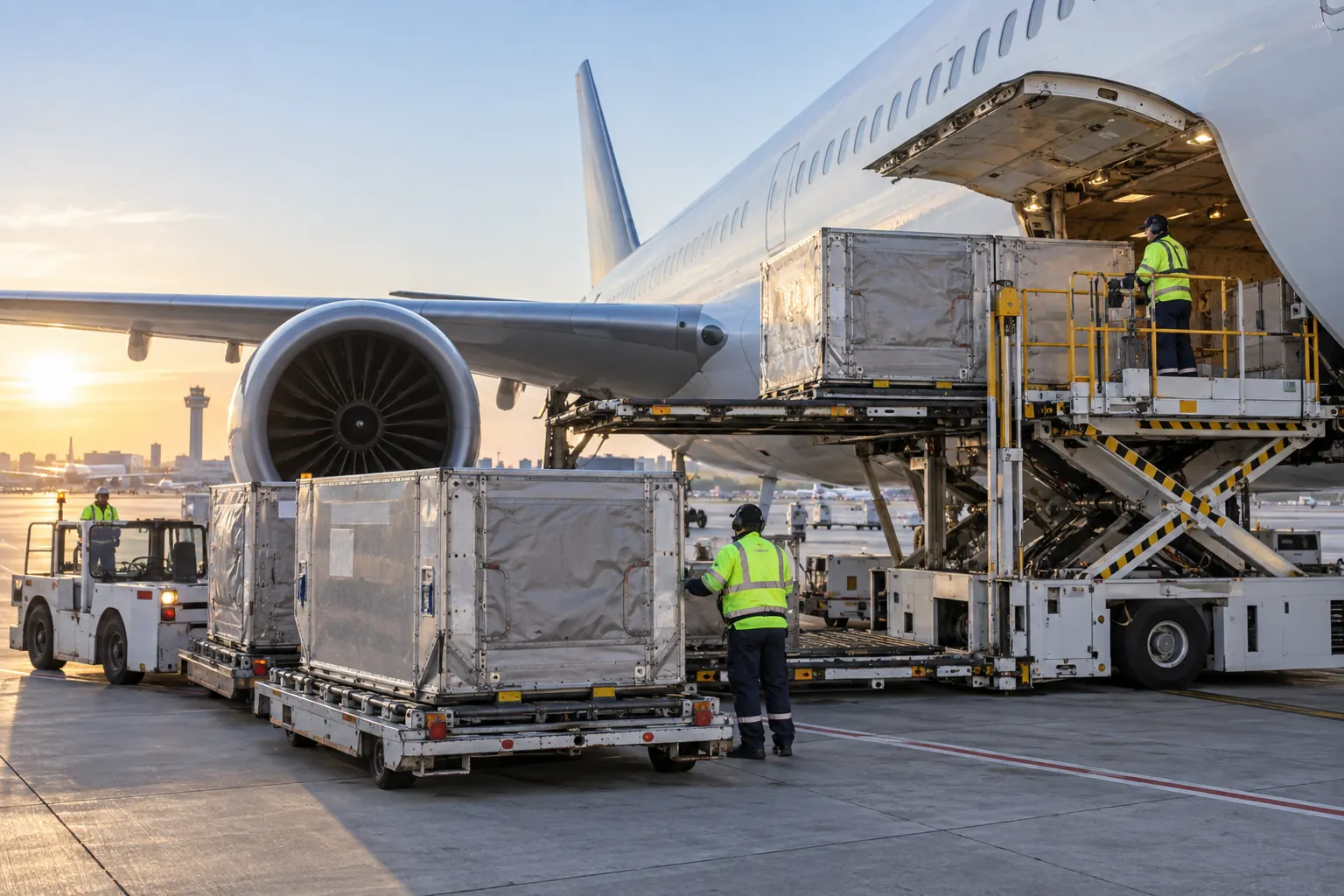
Concentrated waves increase demand for gates, baggage systems, security and airspace at the same time. A disruption early in the bank can propagate because aircraft, crews and connecting passengers are interdependent.
Designing for resilience
Longer minimum connection times, spare gates and schedule buffers reduce the number of theoretical connections but may improve the number that actually work. A robust hub balances choice with recoverability.
The trade-off passengers experience
A tightly timed bank creates more short connections but leaves less room for a late inbound aircraft or a slow baggage transfer. A looser bank may be less convenient on paper yet more resilient. When choosing between itineraries, look at the connection time, the distance between gates and the next available flight, not only the total advertised journey time.
International Flight News separates verified facts, durable context and editorial analysis. Time-sensitive reports identify their primary sources, publication date and material updates.