Removing contamination and protecting clean surfaces are different tasks, and neither creates an unlimited window for take-off.
A clean wing is essential
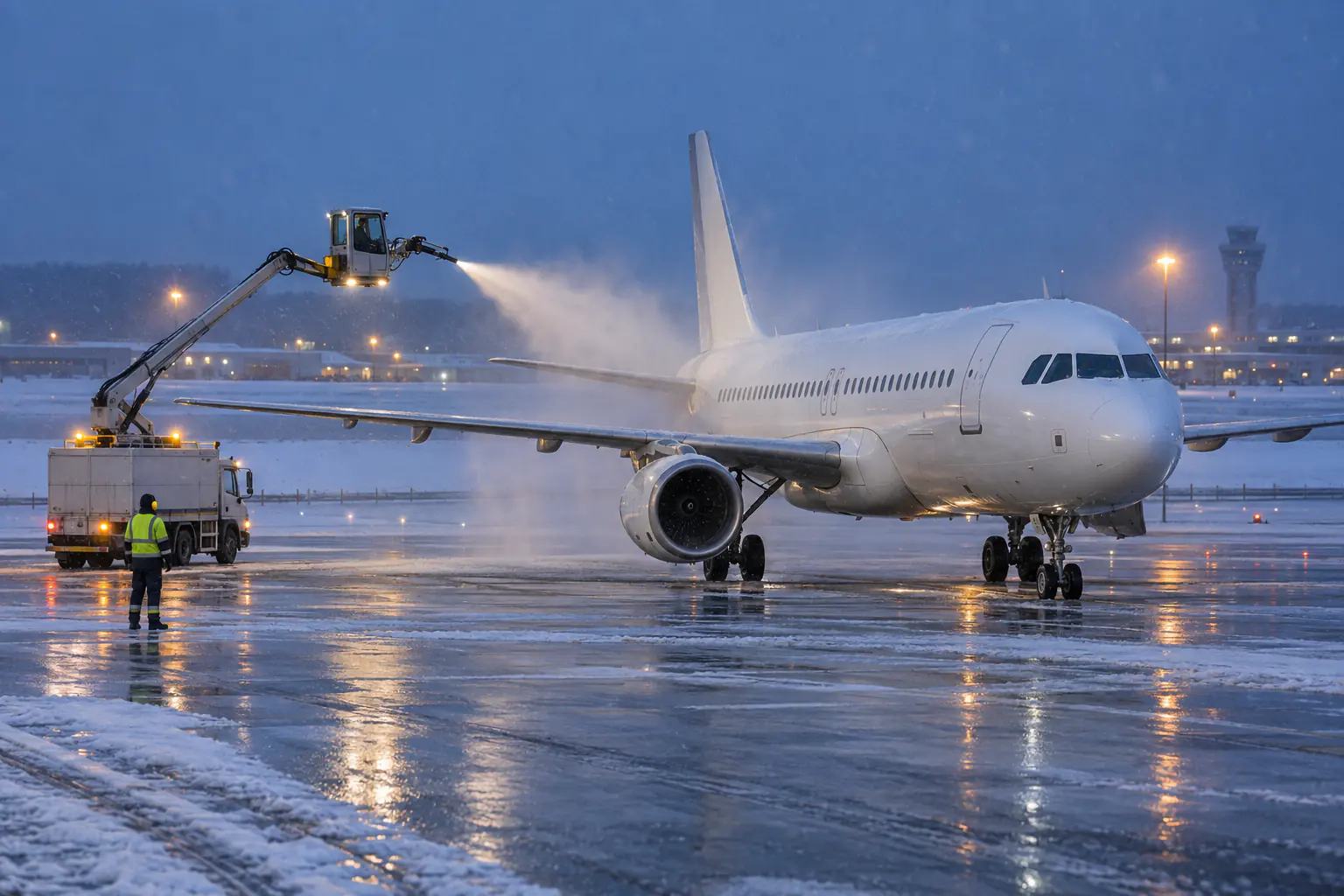
Snow, frost and ice can change the shape and roughness of a lifting surface. Deicing removes contamination already present; anti-icing fluid can provide temporary protection against further accumulation.
Protection time is conditional
Holdover guidance depends on fluid, mixture, temperature and precipitation. It is a planning aid, not a guarantee. Weather changes or queues can require another inspection or treatment.
The crew makes the departure decision
Airport teams coordinate pads, vehicles and runoff while the operator follows an approved programme. The aircraft must meet the clean-aircraft requirement at take-off.

Why a second treatment may be necessary
If precipitation continues, the protection estimated from the anti-icing fluid can expire while an aircraft waits for clearance. The crew must then reassess the aircraft’s surfaces under the approved procedure, and another treatment may be required. This is why an apparently ready aircraft can return to the stand instead of departing.
International Flight News separates verified facts, durable context and editorial analysis. Time-sensitive reports identify their primary sources, publication date and material updates.