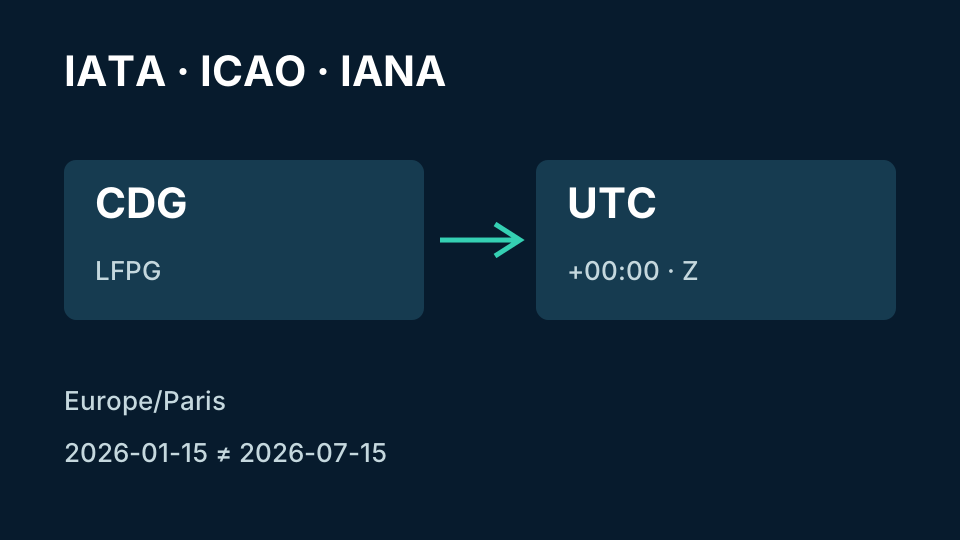
Avoid confusing city codes, airport identifiers, local dates and UTC weather timestamps.
Three identifiers answer different questions
IATA airport codes such as CDG are used in passenger distribution and baggage. ICAO codes such as LFPG identify aerodromes in operational information. Metropolitan codes such as PAR can cover multiple airports and should not be treated as a terminal location. Confirm the actual airport on each ticket before arranging a transfer.
A time zone is not a permanent offset
Europe/Paris is an IANA time-zone identifier. Its UTC offset depends on the date and applicable civil-time rules. A timetable generally displays local airport times, while aviation weather uses UTC. To calculate elapsed travel time, convert both full timestamps, including dates, to a common time standard. Never subtract the clock numbers alone.
Check the calendar and the transfer
An arrival marked +1 normally means the following local calendar day. A date-line crossing can make clock arithmetic especially misleading. Verify terminal changes and whether the next flight leaves from a different airport. The data desk supplies identifiers and time zones, not terminal assignments, schedules or live operational notices.
International Flight News separates verified facts, durable context and editorial analysis. Time-sensitive reports identify their primary sources, publication date and material updates.