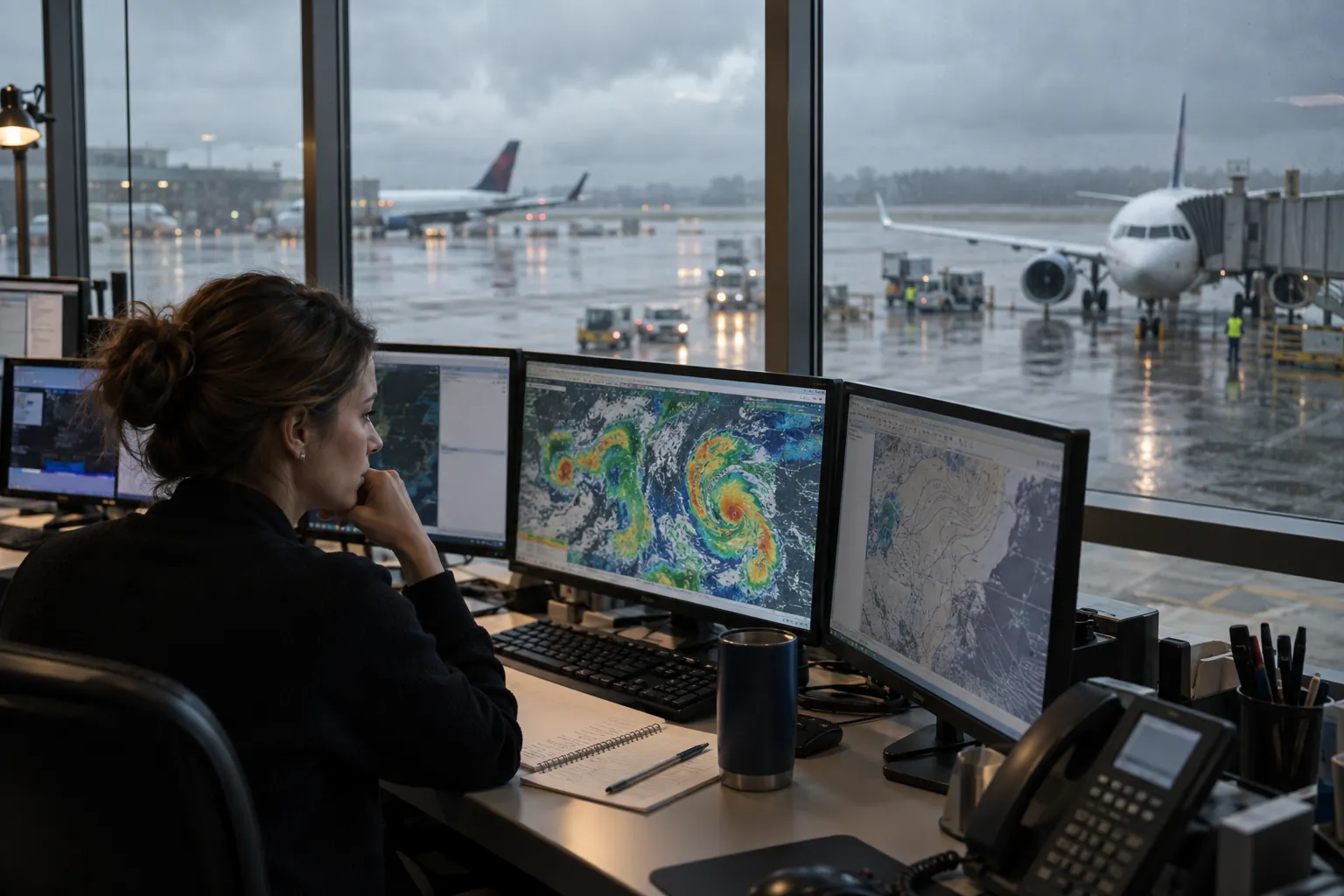
A great-circle track is a baseline, but winds, weather, airspace, performance and traffic constraints shape the filed route.
Geometry is only the starting point
On a sphere, the shortest path often looks curved on a flat map. A great-circle track provides a comparison, not a complete flight plan: aircraft must use available airspace, procedures and approved navigation capabilities.
Wind can reward a longer distance
A route with more miles may take less time or burn less fuel if it avoids headwinds or uses favourable flow. Weather, turbulence, volcanic ash and seasonal jet streams change the answer.
The filed route enters a network
Restrictions, military areas, airport procedures and traffic-flow measures influence acceptance. The plan is checked and may still change tactically after departure.

Why the path can change after filing
A flight plan is a proposed route accepted into a changing traffic system. Weather avoidance, airspace restrictions and controller instructions can alter the flown path. A map drawn after arrival therefore does not by itself show whether dispatch made a poor choice; the comparison needs the forecast available before departure and the constraints encountered in flight.
International Flight News separates verified facts, durable context and editorial analysis. Time-sensitive reports identify their primary sources, publication date and material updates.