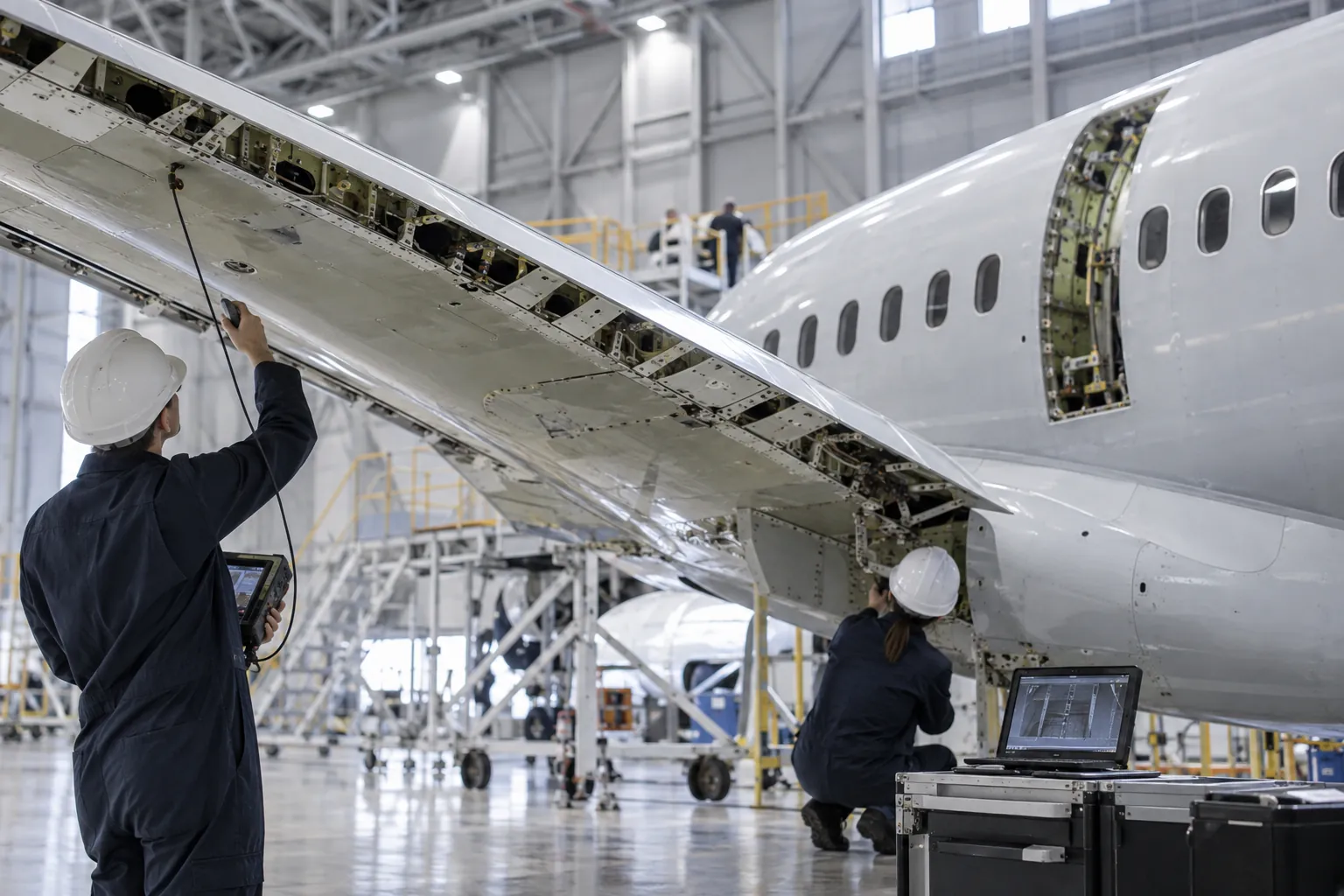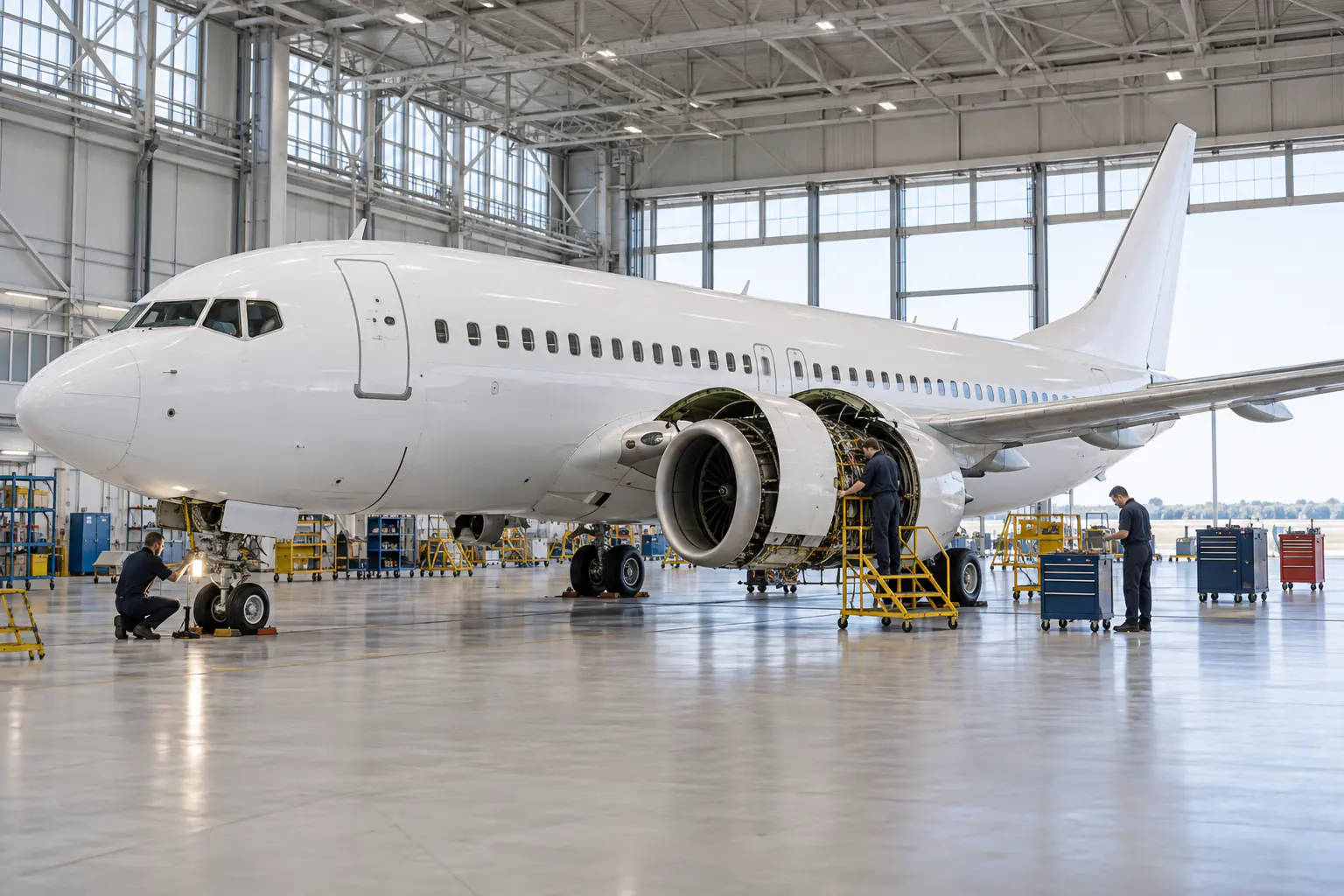
Commercial aircraft are maintained through tasks built around time, flight hours, cycles, condition and mandatory instructions.
Tasks have different triggers
Some work is due after calendar time, flight hours or pressurisation cycles; other tasks follow condition monitoring or an event. Operators package tasks into visits to plan downtime, people and facilities.
Records are part of the aircraft
Continuing airworthiness depends on traceable maintenance, life-limited components, repairs and airworthiness directives. A completed task is not enough if the required record and release are missing.
Checks do not replace daily control
Pre-flight inspections, technical-log reviews and defect decisions continue between large visits. Approved data, qualified personnel and error-capturing make the programme continuous.

What a passenger can infer
A maintenance delay does not by itself reveal a fault’s severity. The operator may be waiting for an approved repair, a licensed technician, a replacement component or a required record entry. An aircraft returns to service only through the applicable release process; a schedule target cannot replace that decision.
International Flight News separates verified facts, durable context and editorial analysis. Time-sensitive reports identify their primary sources, publication date and material updates.