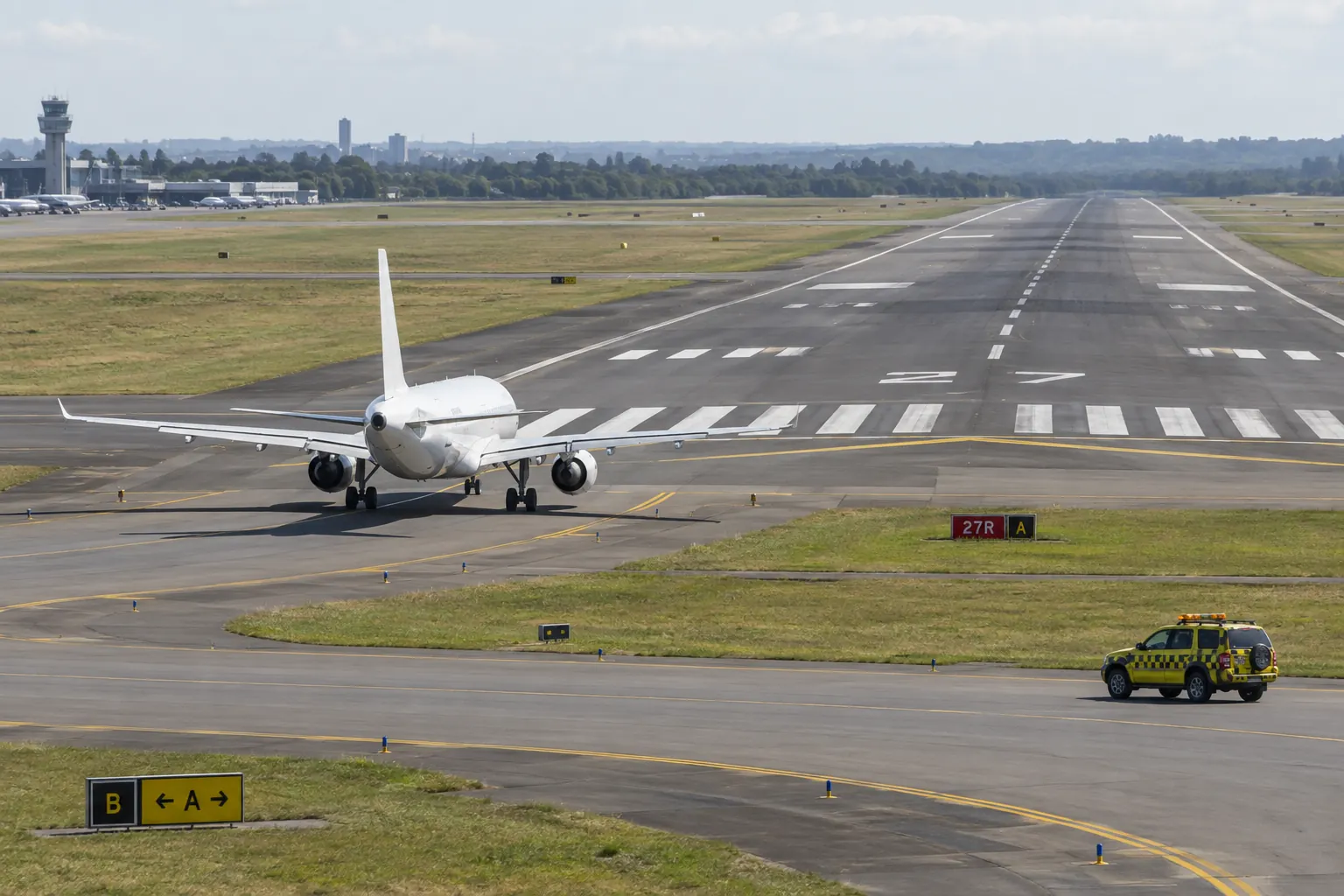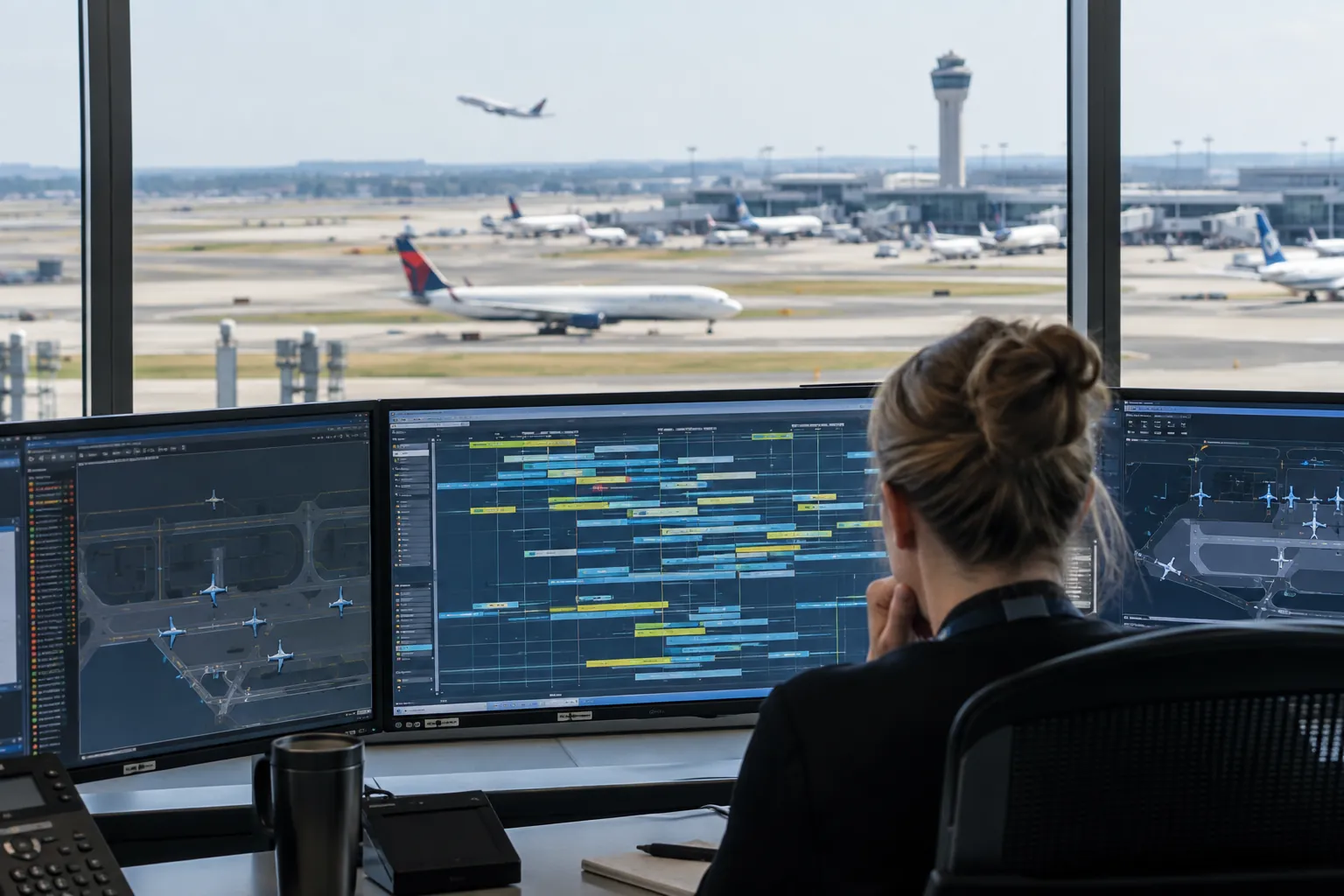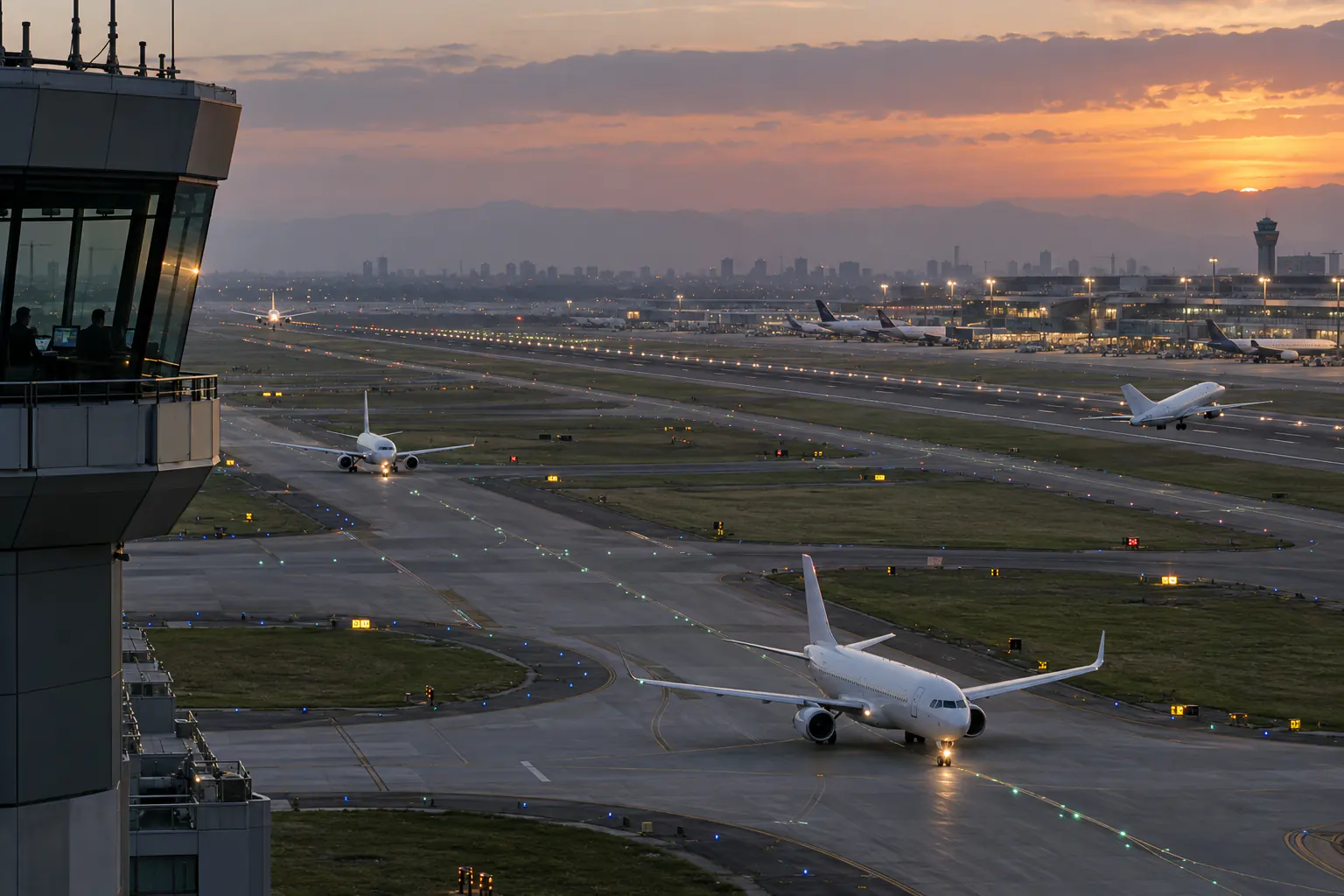
Runway geometry, wake separation, weather, taxiways and terminal constraints determine how many movements an airport can safely handle.
Capacity is a system
Aircraft need different spacing according to size, route and wake turbulence. Intersecting runways, runway crossings and long taxi routes consume additional time. Gates, stands, baggage systems and airspace can become the limiting factor before the pavement does.
Weather changes the calculation
Low visibility, strong crosswinds, thunderstorms or a change of runway direction reduce predictable throughput. Arrivals may need longer spacing and departure queues can grow quickly. The strongest schedules are built around realistic seasonal capacity, not the best hour of the year.
Slots protect the network
At coordinated airports, slots align demand with declared capacity. They do not guarantee an exact take-off time, but they prevent every airline from planning for the same scarce minute. Recovery depends on shared priorities, accurate forecasts and spare operational margin.
The peak hour matters
Annual passenger totals hide the short periods when many aircraft want to arrive or depart together. Required separation, runway crossings, taxiway access, weather and the mix of aircraft determine practical throughput. A second runway may add less capacity than expected if both depend on the same airspace or terminal system. Compare peak-hour operations and reliability, not only runway count.
International Flight News separates verified facts, durable context and editorial analysis. Time-sensitive reports identify their primary sources, publication date and material updates.