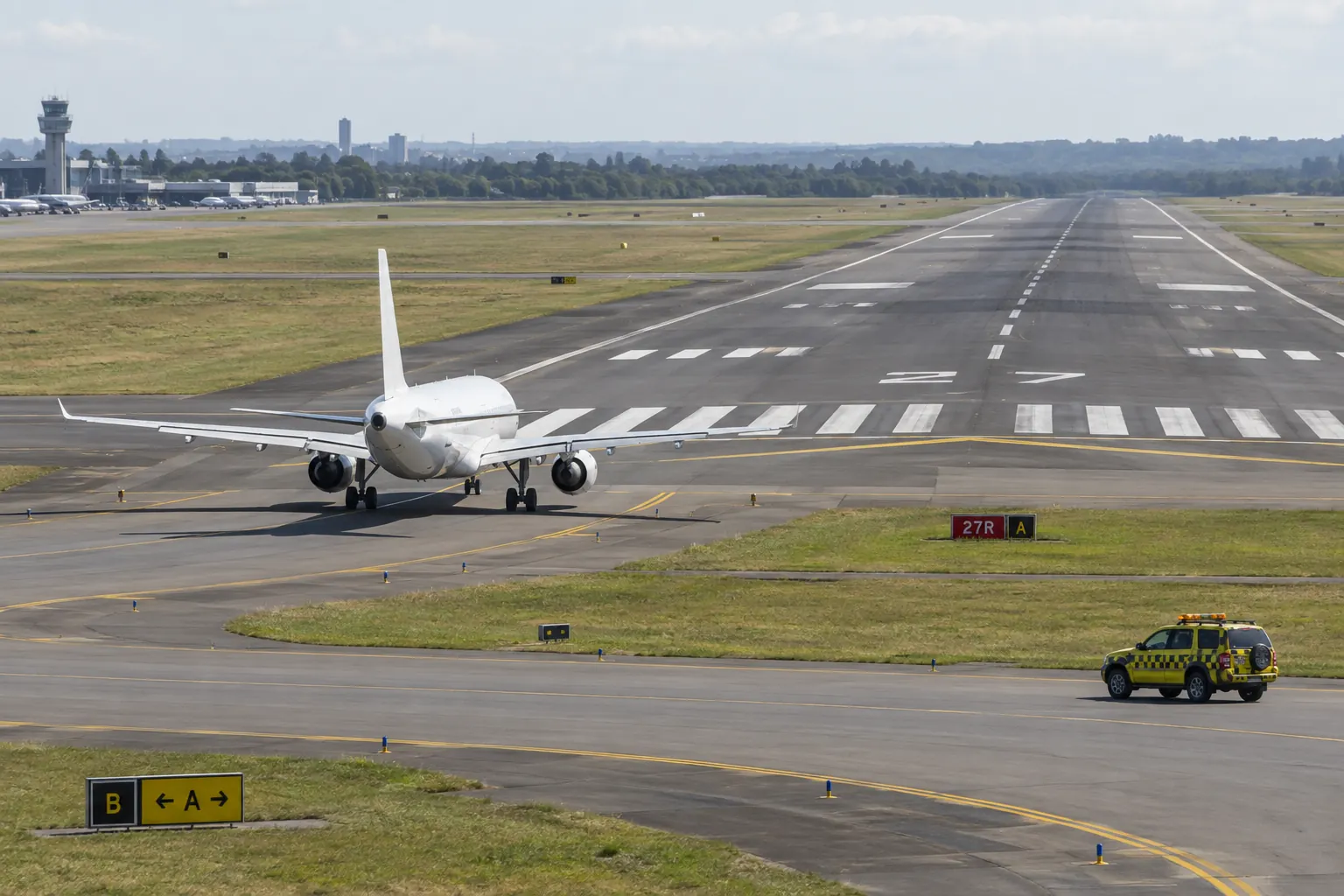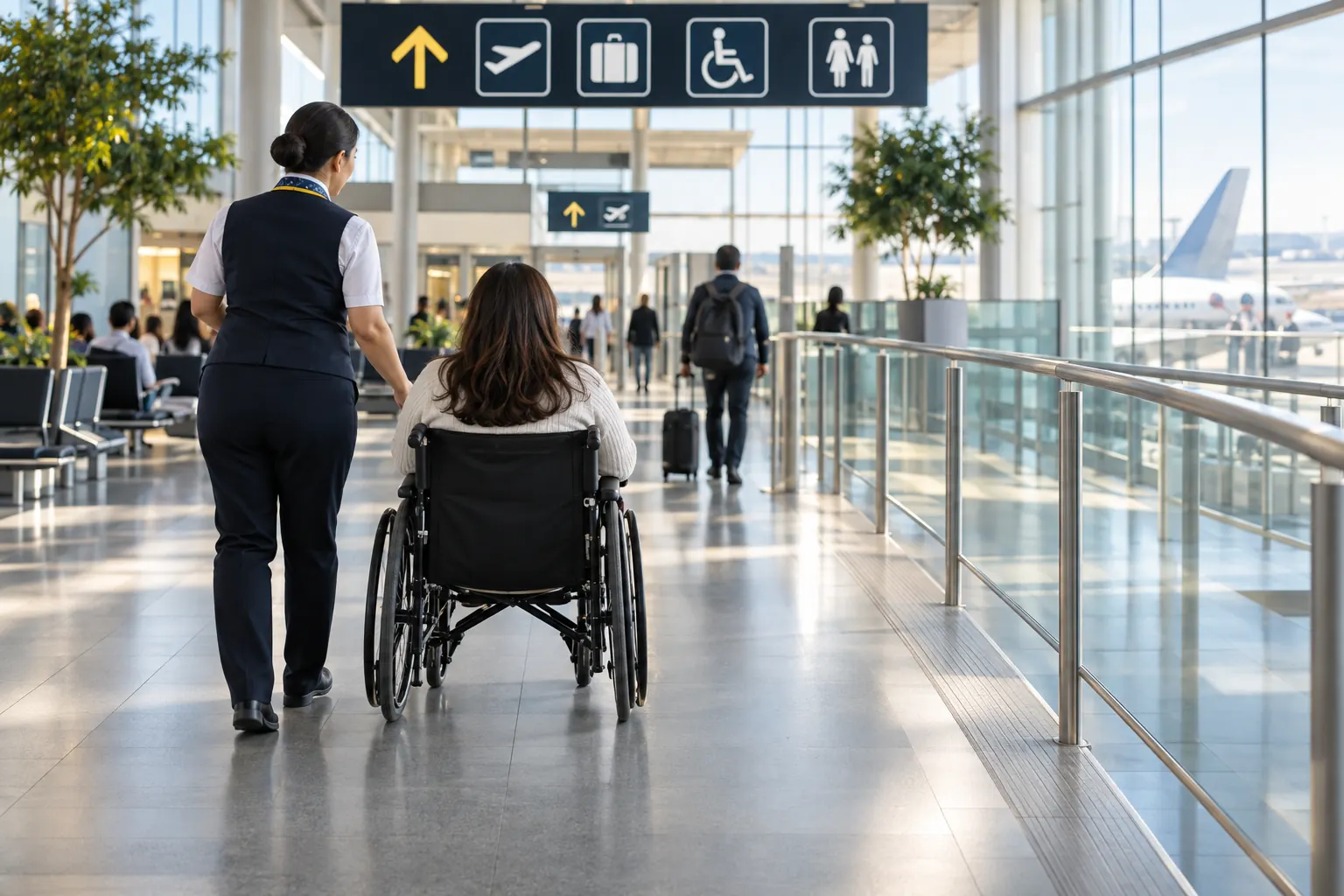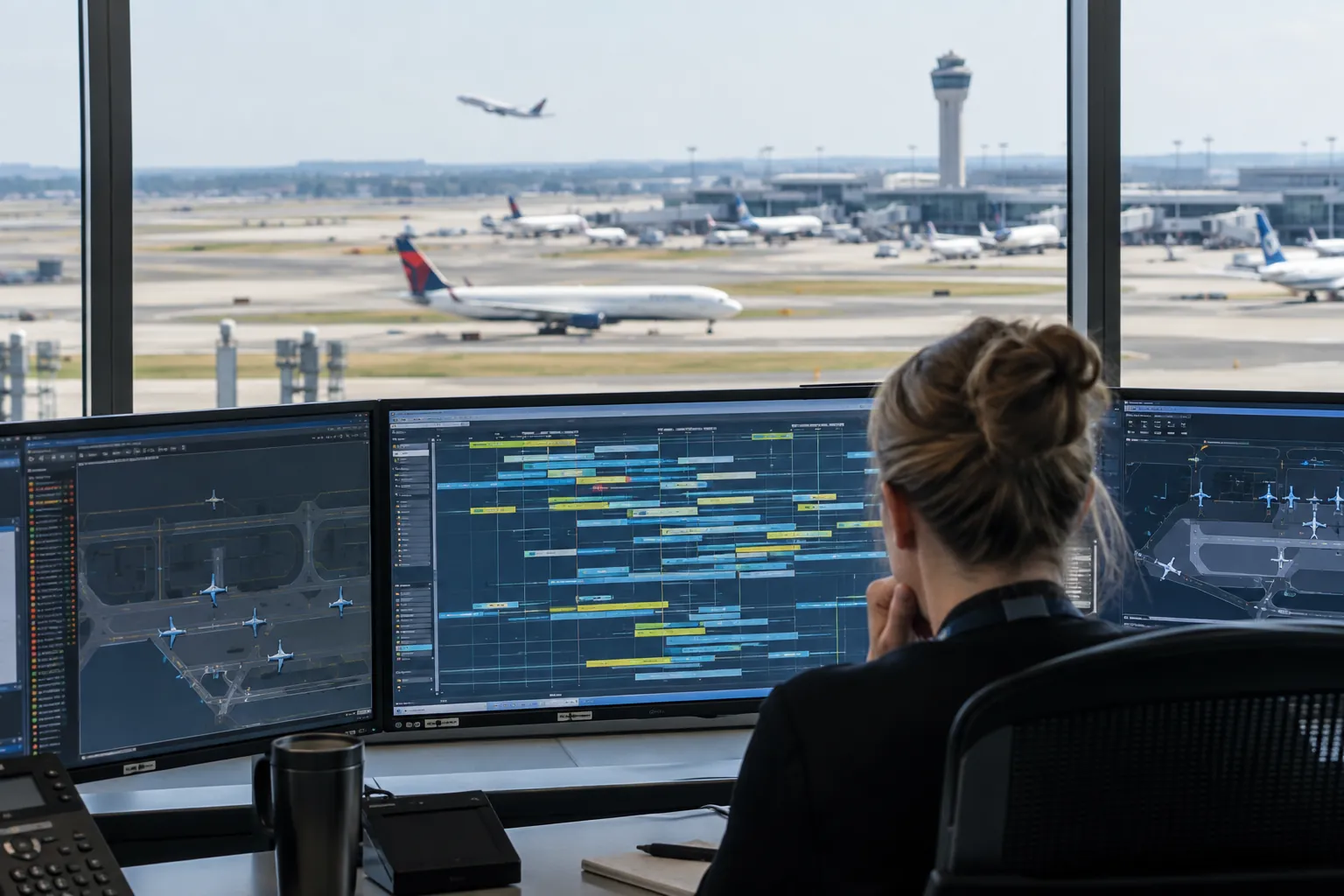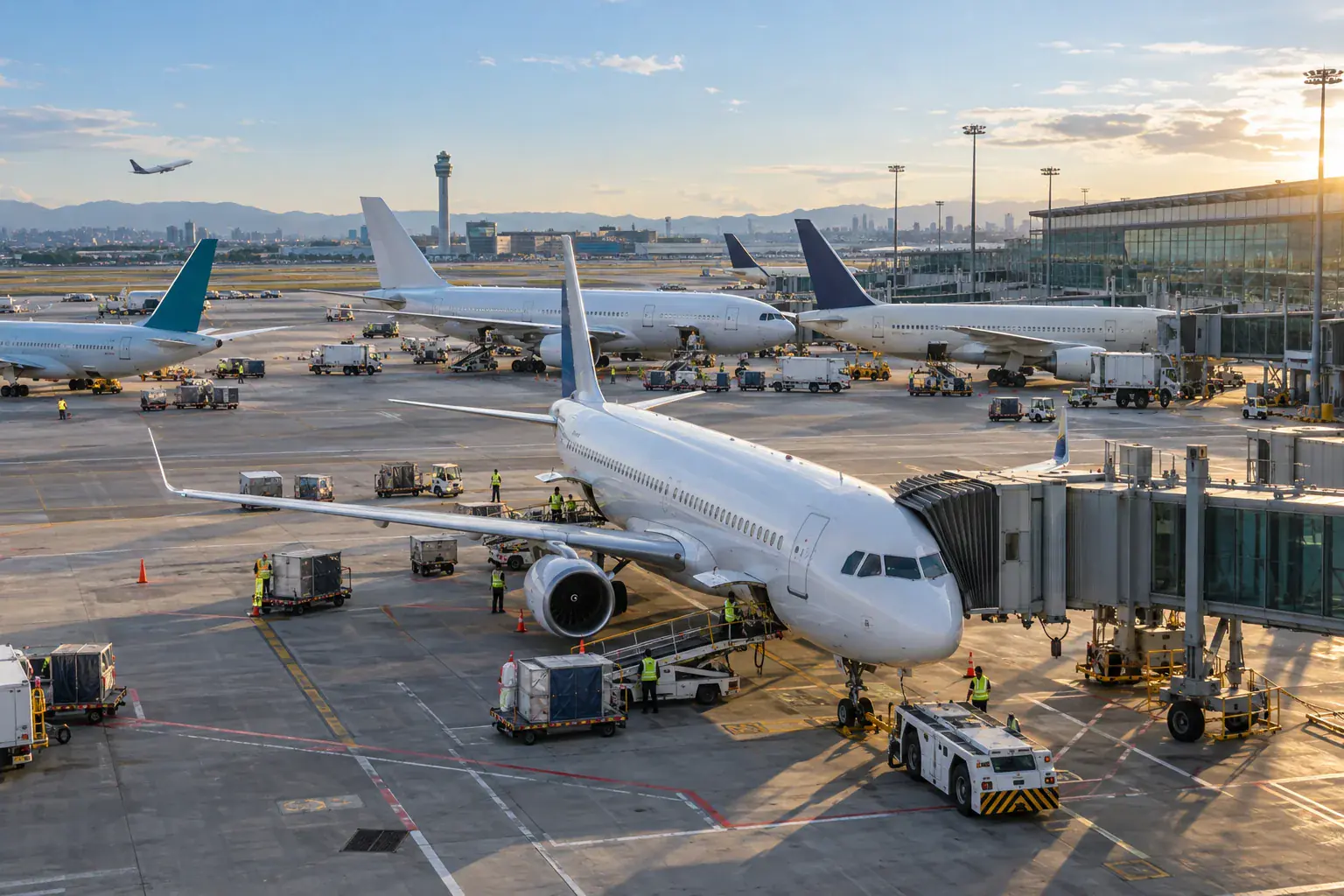
Boarding is only one part of a tightly sequenced operation linking bags, fuel, catering, cleaning, crews and air traffic.
Why the clock starts early
The next departure begins before the aircraft reaches the stand. Gate allocation, passenger connections and ground resources are already being adjusted against the estimated arrival time. A late inbound flight does not automatically become a late outbound flight, but recovering the schedule requires a realistic plan shared by every team.
Parallel work, controlled risk
Cleaning, catering, baggage unloading, refuelling and technical checks can overlap, but only inside strict safety procedures. The best gains come from removing waits between tasks: equipment ready at the correct stand, information passed once, and boarding matched to the actual cabin and baggage status.
What passengers can see
A gate change, a brief pause during boarding or a delayed pushback may be the visible result of a much larger constraint. Reliable operators communicate the cause without promising a departure time that the ground process cannot yet support.
Measure the handoffs, not just the final delay
A turnaround can miss its target because equipment arrived late, a previous task finished later than reported or teams worked from different departure estimates. Recording actual in-block, unloading, servicing, boarding and off-block milestones shows where waiting accumulated. That evidence helps remove repeated gaps without pressuring crews to skip safety or technical checks.
International Flight News separates verified facts, durable context and editorial analysis. Time-sensitive reports identify their primary sources, publication date and material updates.